Friday, January 7, 2011

Mystery Novels and Mass Spectrometers

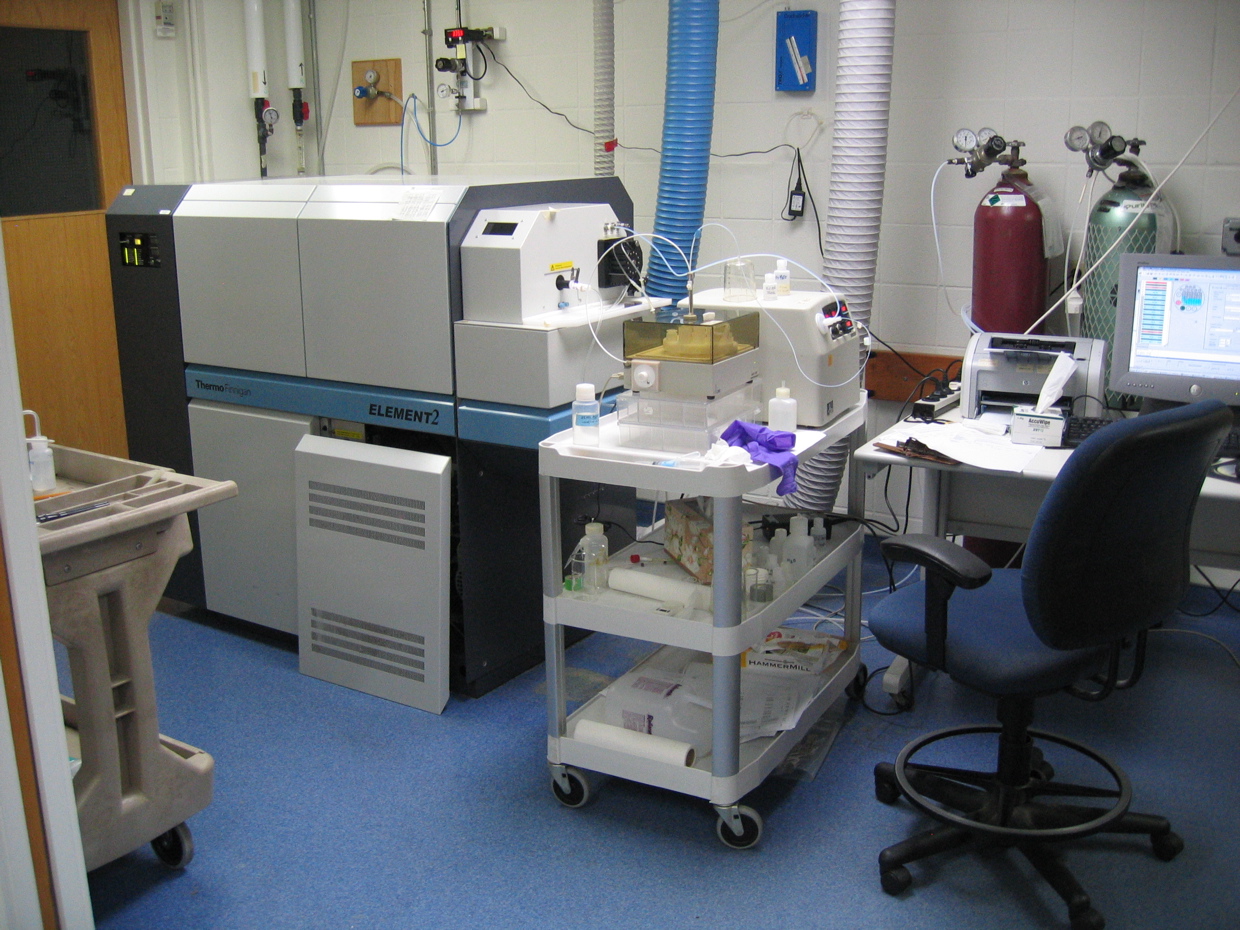
The Element2 mass spectrometer at WHOI. Image taken from here.
This past week geoblogger Callan Bentley of Mountain Beltway reviewed books on time, fallacies, dirt, and climate change. There are some great books in his reviews-- some I've read already and some I've added to my reading list. Alas, I am afraid that my reading list is quite long. I'm very impressed at how many non-fiction books Callan manages to find the time to read. I think Callan must be superhuman-- he seems to do so much!

In recent years, I have found that my reading habits have changed somewhat. Since childhood, I have been in the habit of reading every night before bed. I still read most nights before bed, but I'm afraid that both the quantity and the "quality", so to speak, of my reading has degraded since I started graduate school.

Thursday, January 6, 2011

Sand Structures at Nobska Beach

Nobska sands 1, Woods Hole, December 2010.
Last week my fiance and I went for a long walk around Woods Hole, the village on Cape Cod where I live. On this walk, we stopped at Nobska Beach, a pretty little beach with a view of Martha's Vineyard. There were footprints everywhere, so clearly others (two-legged humans and four-legged canines) had recently taken a winter beach stroll at Nobska. In the summertime, the beach is usually packed with locals and tourists. When we visited the beach last week, however, it was deserted. We walked along looking at the pretty views of the lighthouse and Vineyard. Soon, however, we became more interested in the sands at our feet than the views above.

Tuesday, January 4, 2011

Geology Word of the Week: J is for Jurassic

An artist's vision of Sauropods and Iguanodons during the late Jurassic. Image taken from Wikipedia Commons here.
def. Jurassic
1. A geologic period spanning from approximately 200 to 145 million years ago. 
2. A cool adjective to use in everyday life to describe something or someone ancient and/or gargantuan. For example, "My Jurassic professor doesn't even know how to use a computer. He does all of his lectures in chalk on the blackboard!" and, "Wow, this is a Jurassic portion of french fries! Please help me eat these."
3. A time period when the following dinosaurs were NOT alive: T-Rex,Velociraptors, and Triceratops, the dinosaur stars of the movie "Jurassic Park." Dinosaurs that WERE alive during the Jurassic period include Sauropods such as Apatosaurus and Brachiosaurus, Theropods such as Allosaurus and Megalosaurus, and --one of my favorite dinosaurs--Iguanodons.

Sunday, January 2, 2011

The Scale of Things

Before I started a geology blog, I used to sporadically blog about geology over at Skepchick. These days, I blog here at Georneys about geology, and I blog over at Skepchick about other skeptical and scientific things, such as the premise of the movie "Idiocracy." Occasionally, I will re-post some of my old geology posts from Skepchick. I will also sometimes cross-post on both blogs. The post below originally appeared on Skepchick in 2006 here.

Fold for thought, Western USA, Fall 2005.
There are shapes, colors, and patterns everywhere, and I marvel in how the same patterns often exist at vastly different scales.

I have found myself looking at a rockface, admiring the small, swirling, black-and-white folds in metamorphic gneiss or migmatite. Looking out at the wider landscape, I often see the swirls echoed. The thick rock layers composing the mountain are folded over and under much in the same way that the layers in the hand sample sized rock at my feet are folded. The rock has three inch folds; the mountain has three mile folds, perhaps.

Saturday, January 1, 2011

A New Year's Day Rock: Travertine Icings and Scums

Happy New Year!

To celebrate the new year, here are some photos of some very new rocks. These travertines in Oman are some of the youngest rocks I've encountered in my geological wanderings.

These "icings" and "scums"  are travertines (mostly the mineral calcite) that are precipitating from highly alkaline (pH ~11-12) springs that form when rainwater circulates through mantle peridotite. Thin layers of newly-formed travertine (icings) often float on the surfaces of the alkaline pools. The first year I was in Oman (2009), there was a rare desert rainstorm that pushed the travertine icings to the bottom of the pools. The icings grew back with a few days, so we know that these travertines are very young indeed! Travertine scums often coat the bottoms of the pools, giving the pools a stunning bright turquoise color. 

I am studying the formation of these young travertines- and other types of carbonates- in the Samail Ophiolite in Oman. You can learn more about my thesis research here, and I'll surely blog more about this research in the future. For now, enjoy these pictures of beautiful, newly-formed, desert travertine icings and scums.

Travertine ice 1, Oman, January 2010.

Friday, December 31, 2010

A Year of Travel & New Year's Resolutions

I am relatively new to the geoblogging scene, but several geobloggers-- such as Callan Bentley over at Mountain Beltway and Jessica Ball over at Magma Cum Laude-- have posted a summary of their year of travel. I love travel, so I think I will continue their year-end tradition here at Georneys. Thanks to other geobloggers for the idea!

I am very fortunate to have the ability and opportunity to travel often, both for my work and for my personal life. Below is a summary of my 2010 travels. I've blogged about a few of these most recent travels. Perhaps I will blog about some of the others in the coming year, particularly since I plan to spend most of my time in lab and then writing up my thesis so that I can graduate!

December 2009 - January 2010: South Africa & Oman
My fiance Jackie lives in his native South Africa, so we commute between Cape Cod and Cape Town to see each other. My advisors are fortunately wonderful about letting me periodically work on my thesis from South Africa. I traveled to South Africa in December 2009 to spend the holidays with Jackie and his family. At the end of December, Jackie and I flew to Oman for a month of fieldwork for my thesis research. Jackie came along as my field assistant. We then flew back to South Africa, where I spent another week before returning to Cape Cod.

Jackie, an elephant, and I, Knysna, South Africa, December 2009.

Thursday, December 30, 2010

Geology Word of the Week: I is for Ichnite

Fossil dinosaur footprint, Wyoming, Fall 2005.
def. Ichnite:
A fossilized footprint.