 |
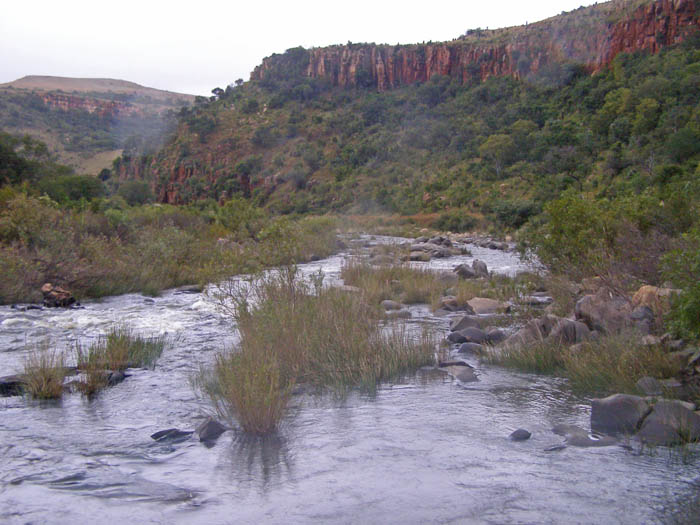
| Chapman's Peak Nonconformity, South Africa, May 2011. |

Showing posts with label South Africa. Show all posts
Showing posts with label South Africa. Show all posts
Tuesday, June 14, 2011
Chapman's Peak Nonconformity

Friday, May 27, 2011
Cape Peninsula in Pictures
 |
| Flowers at Cape Point, South Africa. April 2011. |
Fortunately, now that the machine is tuned and running I only need to keep an eye on it and change something every few minutes. So, I have some time to post some more pictures of my recent trip to South Africa.
Wednesday, May 18, 2011
3D Dinosaur Stamps
 | |
| Postcard for Dinosaur-lover Brian Switek, South Africa, May 2011. |
Just before I left South Africa several days ago, my fiance and I went to the post office to buy some international postcard stamps.
The clerk handed me the five stamps I requested, and I turned to my fiance and said, "Cool! Dinosaur stamps!"
My fiance and I looked more closely at the stamps, and he said, "Huh, that's funny. They're blurry."
I replied, "Oh, that's too bad. Maybe they weren't printed properly?"
For a moment, I was dismayed at the poor quality of the South African stamp printing system. Then I realized I was mistaken. The South African stamp printing system wasn't bad. It was awesome! Far more awesome than the American one, in fact.
I shouted, "Wait... I think they're 3D!"
Several customers in line behind us gave us whimsical looks as my fiance and I excitedly chattered about our 3D dinosaur stamp discovery. The clerk just smiled.
After finishing our shopping, we headed back to our apartment and managed to find a set of 3D glasses. Yes, we are geeky enough to have 3D glasses at home. Sure enough, the dinosaur stamps jumped to life when viewed with 3D glasses! We have decided that these are the coolest stamps EVER.
Here is some more information on the 3D South African dinosaur stamps:
3D Dinosaur Stamps on StampsWiki
The stamps show five different African dinosaurs. There are two images of each dinosaur: one of the skeleton and one as the dinosaur may have looked in the flesh.
 |
| Dinosaur stamps- skeletons. Image from StampsWiki. |
 |
| Dinosaur stamps- in the flesh. Image from StampsWiki. |
Tuesday, May 10, 2011
The Maltese Cross
I'm back to working long days in lab, and I miss being outdoors in South Africa. So, to make myself happy after a long 12-hour lab day, I thought I'd post some more pictures from my recent trip to the Cederberg Mountains in South Africa.
The day after we visited the Sevilla Rock Art Trail, my fiance and I hiked up to a rock feature known as "The Maltese Cross." Hiking up to the cross is a relatively easy, ~1/2 day hike if you're in good hiking shape. For various reasons (too much time in lab for me and too much time at sea for my fiance), we are not currently in top hiking form. So, we decided to allocate a full day to the Maltese Cross hike. We also needed a full day because we were staying in a little cabin near the town of Citrusdal. The cabin where we were staying is actually very close to the cross as the bird flies, but there is no road or path leading directly from Citrusdal to the cross. So, we had to drive north-- about halfway to Clanwilliam-- and take a small, pothole-riddled dirt road through the town of Algeria and then down to the little village (just a wine farm, really) of Dwarsrivier. The drive from Citrusdal to Dwarsrivier takes about 1.5 hours-- including about an hour on the dirt road-- each way.
Driving from Algeria to Dwarsrivier is very scary, particularly when you are driving an old, rusty 1994 VW CitiGolf. Note that the car actually has the word "Citi" in it. This is a city car, not a Cederberg car. However, my fiance's trusty CitiGolf-- named Hubert-- has made many a trip along the dirt roads of the Cederberg. As you might expect, Hubert always comes back from the Cederberg with an injury. On this trip a rock badly cracked one of his front lights. A month or so ago when my fiance was in the Cederberg, a tire blew out in a dramatic fashion. Last September we snapped the muffler in two. As you can imagine, driving along a dirt road in Hubert is somewhat nerve-wracking and destructive (to poor Hubert), which is why we are now looking into buying a proper 4-by-4 vehicle.
The day after we visited the Sevilla Rock Art Trail, my fiance and I hiked up to a rock feature known as "The Maltese Cross." Hiking up to the cross is a relatively easy, ~1/2 day hike if you're in good hiking shape. For various reasons (too much time in lab for me and too much time at sea for my fiance), we are not currently in top hiking form. So, we decided to allocate a full day to the Maltese Cross hike. We also needed a full day because we were staying in a little cabin near the town of Citrusdal. The cabin where we were staying is actually very close to the cross as the bird flies, but there is no road or path leading directly from Citrusdal to the cross. So, we had to drive north-- about halfway to Clanwilliam-- and take a small, pothole-riddled dirt road through the town of Algeria and then down to the little village (just a wine farm, really) of Dwarsrivier. The drive from Citrusdal to Dwarsrivier takes about 1.5 hours-- including about an hour on the dirt road-- each way.
Driving from Algeria to Dwarsrivier is very scary, particularly when you are driving an old, rusty 1994 VW CitiGolf. Note that the car actually has the word "Citi" in it. This is a city car, not a Cederberg car. However, my fiance's trusty CitiGolf-- named Hubert-- has made many a trip along the dirt roads of the Cederberg. As you might expect, Hubert always comes back from the Cederberg with an injury. On this trip a rock badly cracked one of his front lights. A month or so ago when my fiance was in the Cederberg, a tire blew out in a dramatic fashion. Last September we snapped the muffler in two. As you can imagine, driving along a dirt road in Hubert is somewhat nerve-wracking and destructive (to poor Hubert), which is why we are now looking into buying a proper 4-by-4 vehicle.
 | ||
| My fiance's "field" CitiGolf at the farm in Dwarsrivier, South Africa, May 2011. |
Saturday, May 7, 2011
Sevilla Rock Art Trail
 |
| Jumping man with spear, Sevilla Rock Trail, South Africa, May 2011. |
 |
| Delicious lunch at the Khoisan Kitchen, South Africa, May 2011. |
Sunday, May 1, 2011
Interesting Sandstone Weathering at Cape Point
 |
| Gorgeous sandstone, Cape Point, South Africa, April 2011. |
A couple of days ago my fiance and I did a few hikes around Cape Point, South Africa. There is abundant sandstone all around the point-- most of the sandstone around Cape Point and Cape Town is part of the Table Mountain Sandstone Group (TMG).
Tuesday, April 19, 2011
Off to South Africa...
In a few hours I begin about 30 hours of travel, starting with an 8am bus to the Boston Airport. I then take four flights: Boston-DC-Dakar-Johannesburg-Cape Town. I actually like traveling and airports and airplanes and such, but even for me this is a long, tiring trip.This is actually my sixth trip to South Africa. My fiance lives in South Africa (he's from Joburg originally), so we commute back-and-forth between Cape Cod and Cape Town as part of our very long distance relationship. I'm very excited to be traveling to Cape Town once again-- Cape Town is already a second home to me, and I plan to move there later this year. Traveling regularly on 24 to 36 hour trips to Cape Town, I can say this: those trips to Europe and cross-country are a breeze now.
In true busy grad student form, I spent the last few days reducing data and finishing up things in lab rather than preparing for my trip. So, I need to stay up a couple more hours to pack and wash dishes and such. Somehow in the midst of hours upon hours of data reduction, I never noticed the tornado that whipped through my apartment, scattering clothes and books and coffee cups everywhere. I need to try to reassemble my apartment into relative order before I leave. It's okay-- in my experience sleeping little the night before the trip can lead to some tolerable on-flight sleep. And at least on South African Airways the flight attendants are friendly, the food is edible, and you can drink as much beer and wine as you want.
I often work on my trips to South Africa, but I'm just bringing a few papers with me this time. I'm taking some much-needed vacation after 4 months of hard work in lab with very few days off and too much time spent indoors. When I return, I hope to be refreshed and ready to finish up the very last of the labwork for my PhD thesis.
Blogging may be a little light the next two weeks. I will post the Geology Word of the Week, and I will re-post an "Origin of the Earth" series which I wrote awhile back for Skepchick. When I return from my vacation, I promise to post some pictures from South Africa. I'll also finish up the Oklo natural nuclear reactor post and finish putting together the Lulu book of my interviews with my dad, a nuclear engineer, about the Fukushima Daiichi nuclear power plant disaster in Japan.
Okay, time to pack and wash dishes!
In true busy grad student form, I spent the last few days reducing data and finishing up things in lab rather than preparing for my trip. So, I need to stay up a couple more hours to pack and wash dishes and such. Somehow in the midst of hours upon hours of data reduction, I never noticed the tornado that whipped through my apartment, scattering clothes and books and coffee cups everywhere. I need to try to reassemble my apartment into relative order before I leave. It's okay-- in my experience sleeping little the night before the trip can lead to some tolerable on-flight sleep. And at least on South African Airways the flight attendants are friendly, the food is edible, and you can drink as much beer and wine as you want.
I often work on my trips to South Africa, but I'm just bringing a few papers with me this time. I'm taking some much-needed vacation after 4 months of hard work in lab with very few days off and too much time spent indoors. When I return, I hope to be refreshed and ready to finish up the very last of the labwork for my PhD thesis.
Blogging may be a little light the next two weeks. I will post the Geology Word of the Week, and I will re-post an "Origin of the Earth" series which I wrote awhile back for Skepchick. When I return from my vacation, I promise to post some pictures from South Africa. I'll also finish up the Oklo natural nuclear reactor post and finish putting together the Lulu book of my interviews with my dad, a nuclear engineer, about the Fukushima Daiichi nuclear power plant disaster in Japan.
Okay, time to pack and wash dishes!
Saturday, January 22, 2011
What Type of Weathering?
Earlier today Callan Bentley over at Mountain Beltway posted these pictures of some rocks with interesting weathering patterns that he's seen recently.
When I read this post, my first thought was: I've seen this type of weathering before!
And my second thought was: What the heck is the name of this type of weathering?
I'm still not sure, though my first idea was liesegang weathering, which is a type of weathering where chemical diffusion creates a ring or rim of rock that is more resistant to physical erosion.
Does anyone know what this type of weathering is called? Is this liesegang weathering or is it something different? Does this type of weathering have a name?
Here are some pictures from Knysna, South Africa of weathering similar to the photos Callan posted. One difference in the rocks below is that iron (which oxidizes to the reddish brown color) is definitely playing a role in this weathering. You can see, though, that the weathering follows fractures similar to the way that Callan's rocks are weathering. Note the sunglasses for scale. Click on any of the pictures below to view a larger version.
And here's a similar weathering pattern in a boulder (about a meter across) in the Cederberg Mountains (near the town of Algeria) in South Africa:
When I read this post, my first thought was: I've seen this type of weathering before!
And my second thought was: What the heck is the name of this type of weathering?
I'm still not sure, though my first idea was liesegang weathering, which is a type of weathering where chemical diffusion creates a ring or rim of rock that is more resistant to physical erosion.
Does anyone know what this type of weathering is called? Is this liesegang weathering or is it something different? Does this type of weathering have a name?
Here are some pictures from Knysna, South Africa of weathering similar to the photos Callan posted. One difference in the rocks below is that iron (which oxidizes to the reddish brown color) is definitely playing a role in this weathering. You can see, though, that the weathering follows fractures similar to the way that Callan's rocks are weathering. Note the sunglasses for scale. Click on any of the pictures below to view a larger version.
 |
| Knysna rocks 1, South Africa, December 2009. |
 |
| Knysna rocks 2, South Africa, December 2009. |
 | |||||
| Cederberg boulder, South Africa, September 2010. |
Saturday, January 15, 2011
Geology Word of the Week: K is for Komatiite
 |
| Komati River, South Africa. Image from Wikipedia here. |

1. An ultramafic, volcanic rock that is primarily composed of the minerals pyroxene and olivine.
2. A very unusual and rare volcanic rock type that is not produced today. Most komatiite lavas were produced in the Archean (approximately 2.5 to 3.8 billion years ago).
3. A rock type whose hotly-- and wetly-- debated origin sometimes galvanizes geologists to shouting matches, fist fights, and drinking contests.
Friday, December 31, 2010
A Year of Travel & New Year's Resolutions
I am relatively new to the geoblogging scene, but several geobloggers-- such as Callan Bentley over at Mountain Beltway and Jessica Ball over at Magma Cum Laude-- have posted a summary of their year of travel. I love travel, so I think I will continue their year-end tradition here at Georneys. Thanks to other geobloggers for the idea!
I am very fortunate to have the ability and opportunity to travel often, both for my work and for my personal life. Below is a summary of my 2010 travels. I've blogged about a few of these most recent travels. Perhaps I will blog about some of the others in the coming year, particularly since I plan to spend most of my time in lab and then writing up my thesis so that I can graduate!
December 2009 - January 2010: South Africa & Oman
My fiance Jackie lives in his native South Africa, so we commute between Cape Cod and Cape Town to see each other. My advisors are fortunately wonderful about letting me periodically work on my thesis from South Africa. I traveled to South Africa in December 2009 to spend the holidays with Jackie and his family. At the end of December, Jackie and I flew to Oman for a month of fieldwork for my thesis research. Jackie came along as my field assistant. We then flew back to South Africa, where I spent another week before returning to Cape Cod.
I am very fortunate to have the ability and opportunity to travel often, both for my work and for my personal life. Below is a summary of my 2010 travels. I've blogged about a few of these most recent travels. Perhaps I will blog about some of the others in the coming year, particularly since I plan to spend most of my time in lab and then writing up my thesis so that I can graduate!
December 2009 - January 2010: South Africa & Oman
My fiance Jackie lives in his native South Africa, so we commute between Cape Cod and Cape Town to see each other. My advisors are fortunately wonderful about letting me periodically work on my thesis from South Africa. I traveled to South Africa in December 2009 to spend the holidays with Jackie and his family. At the end of December, Jackie and I flew to Oman for a month of fieldwork for my thesis research. Jackie came along as my field assistant. We then flew back to South Africa, where I spent another week before returning to Cape Cod.
 |
| Jackie, an elephant, and I, Knysna, South Africa, December 2009. |
Wednesday, December 8, 2010
Geology Word of the Week: F is for Fabric
Note: I started the Geology Word of the Week at Skepchick, where I am one of several fabulous, skeptical women (and one deserving man) bloggers. For the first few weeks of the Geology Word of the Week, I am going to re-post my "Geology Words of the Week(ish)" from Skepchick. Before being distracted by graduate school and life, I made my way from A to G... I will re-post those letters here and then continue with the rest of the alphabet. In 26 weeks, I will have made my way through the alphabet!  |
| Foliated fabric in a sedimentary carbonate rock, Oman 2009. |
def. Fabric:
The arrangement of the elements (minerals, textures, fossils, layers) that make up that rock. The fabric of a rock is basically the pattern of the rock.
Saturday, November 27, 2010
Field Animal Favorites
If I were not a geologist, I think I would be a zoologist or would go to graduate school to study animal behavior. I really like animals. I limit myself to two housecats because I like to travel and animals require you to stay home and take care of them. However, a part of me wants a whole zoo... in my one bedroom apartment. I think this runs in the family. My grandmother has six cats, three dogs, fifteen horses, several cows, peacocks, and some goats. She used to have a three-legged goat that lived in her house with her. My sister has two ferrets, many lizards, and fish. My sister also breeds (yes, breeds) tarantulas. Yes, my sister is cool and bad-ass. My parents currently only have two cats and a dog, but when I was growing up we also had nine guinea pigs and myriad hermit crabs and fish.
Bison, Sheep, Goats, and Camels... Oh My!
 |
| Bison Jam, Yellowstone, Fall 2005. |
Subscribe to:
Posts (Atom)